
Everything is hard.
But the “hard” most people choose?
Is the kind that keeps them stuck in a relationship they’ve already outgrown—shrinking, self-editing, and calling it comfort like it’s a personality trait.
That’s not emotional maturity.
That’s a fragmented identity trying to survive.
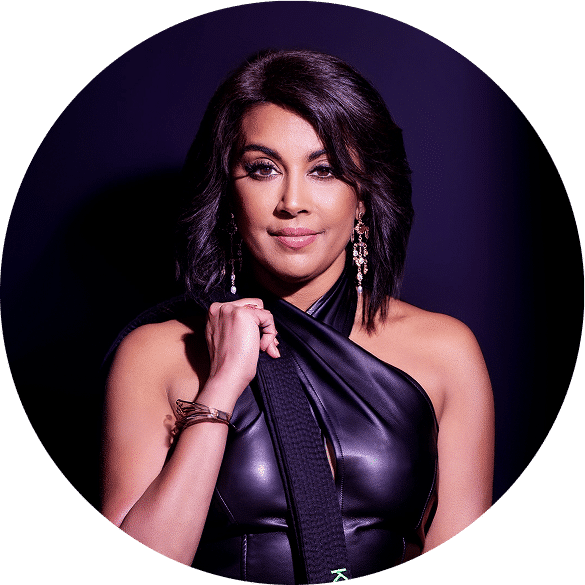
In this episode of Gloves Off After Dark, Joshua T. Berglan and I talk about what really happens to your sense of self when you stay in a misaligned relationship for too long: the quiet self-abandonment, the inner split between who you really are and who you think you have to be, and the cost it has on every other relationship in your life.
Staying is not neutral.
It has a price: your identity, your potential, and your aliveness.
Watch the Conversation: Fragmented Identity & Relationships
If you’d rather watch than read, you can catch the full Gloves Off After Dark episode here:
▶ Watch the episode on YouTube:
Fragmented Identity: The Cost of Staying in a Relationship You Outgrew
And learn more about my co-host and collaborator, Joshua T. Berglan, whose work around identity, purpose, and transformation is changing lives.
What Is “Fragmented Identity” in a Relationship?
When people say, “I lost myself in that relationship,” they’re usually describing fragmented identity without having the language for it.
Fragmented identity happens when:
- You split into different versions of yourself for safety or approval.
- You show one part of you in the relationship and mute the rest.
- You abandon your own needs, values, or desires to keep the peace.
You become:
- The version that won’t rock the boat.
- The version that’s easy to love.
- The version that won’t trigger anyone else’s insecurity.
On the outside, you look stable.
On the inside, you’re negotiating against your own soul.
This is the silent cost of staying in a relationship you’ve outgrown.
Signs You’ve Outgrown the Relationship (But Haven’t Admitted It Yet)
Sometimes the relationship isn’t “toxic.” Nobody’s screaming. No plates are being thrown. Bills are paid. Vacations get posted.
That actually makes it harder to leave—because you can’t justify it with chaos.
Instead, you feel:
- Chronically under-expressed. You rarely say what you really think or want.
- Emotionally muted. You’re not miserable, but you’re not fully alive either.
- Energetically heavy. You feel tired after time together, not nourished.
- Resentful in silence. You carry the emotional load but don’t name it.
- Invisible. Your biggest dreams and most authentic traits feel unseen.
If you’ve ever thought, “They love me, but I can’t fully be myself here,” that’s a huge red flag.
Because love without room for your full identity isn’t love—it’s containment.
The Comfort Zone vs. True Emotional Safety
Most people confuse comfort with safety.
- Comfort says: Don’t change anything. It’s good enough.
- Safety says: You can tell the truth and still be held.
Staying in a relationship “because it’s comfortable” can actually be a quiet form of self-betrayal. It may feel familiar, predictable, and socially acceptable—but that doesn’t mean it’s aligned.
Ask yourself:
- Do I feel safe to tell the uncomfortable truth in this relationship?
- Or do I keep things surface-level to avoid conflict, judgment, or abandonment?
If your nervous system feels calm because you’re silent, not because you’re seen, you’re living in a comfort trap—not real safety.
The Identity Scripts That Keep You Stuck
Fragmentation doesn’t just come from one relationship; it’s reinforced by societal expectations and old identity scripts.
You may have been rewarded for being:
- The “good partner”
- The reliable one
- The peacemaker
- The low-maintenance one
- The one who “holds it all together”
So when you even think about leaving, or changing the rules of engagement, it feels like betrayal:
- Betrayal of your role
- Betrayal of your family’s expectations
- Betrayal of your image as the “stable” one
But here’s the truth:
You’re not betraying anyone by honoring your wholeness.
You’re betraying yourself when you don’t.
The real question becomes:
Are you being loyal to the relationship… or to the identity you built to survive it?
How Fragmented Identity in One Relationship Bleeds into Everything
When your identity is fragmented in your romantic relationship, it never stays in that one container.
It quietly affects:
- Your friendships. You attract people who expect the edited version of you.
- Your work. You downplay your creativity, leadership, or ambition.
- Your body. Chronic tension, fatigue, or burnout become your baseline.
- Your parenting. Your kids watch you model self-abandonment as “normal.”
- Your spiritual life. You feel disconnected from your own inner knowing.
You start to live at 60% of your capacity—but call it “being responsible.”
Over time, you don’t just feel stuck in a relationship.
You feel stuck in your whole life.
Integration: Becoming One Aligned Version of You
The opposite of fragmentation is integration—living as one coherent, honest version of yourself, no matter who’s in the room.
Integration sounds like:
- “I’m not going to shrink so you can stay comfortable.”
- “I can love you and still say this isn’t right for me.”
- “I’m no longer negotiating my needs down to keep the peace.”
- “If being my whole self costs me this dynamic, then it was too expensive anyway.”
Integration doesn’t always mean leaving, but it does mean:
- The dynamic must evolve, or
- You must be willing to walk away from what can’t honor your wholeness.
You cannot build a life by design on top of an identity built by compromise.
This is the kind of deep work we’ll be doing at Life by Design: Vitality • Wealth • Impact™, my in-person experience on January 31 in San Diego, where we rebuild the architecture of your life around an integrated, fully expressed you—not the version you had to become to keep everyone else comfortable.
👉 Learn more about Life by Design here.
Reflection Questions: Have You Outgrown This Relationship?
Use these questions as a personal audit. Be brutally honest:
- Do I like who I am in this relationship?
- Do I recognize myself, or do I feel like a character I’m playing?
- What parts of me have gone quiet since this relationship began?
- If nothing changed in the next three years, how would I feel?
- If my child or best friend were living my exact life, what would I tell them to do?
Your body usually tells you the truth before your mind can rationalize it. Notice:
- The tightness in your chest when you think about bringing up a real issue
- The way your energy drops before a conversation you’re dreading
- The relief you feel when you’re away and allowed to be your full self
Those aren’t random. That’s your nervous system showing you exactly where you’ve outgrown the container.
Your Identity Was Never Meant to Be Negotiated Away
You didn’t lose yourself in one dramatic moment.
You lost yourself in a series of small trades:
- A need you didn’t voice
- A truth you swallowed
- A desire you minimized
- A boundary you never enforced
Call it loyalty. Call it love. Call it compromise.
At some point, it becomes what it actually is: self-erasure.
This isn’t about villainizing the other person. Some relationships truly were perfect for who you were at one point. They just aren’t aligned with who you’re becoming now.
And that’s okay.
The real work is not asking, “Are they a bad person?”
The real work is asking, “Is this relationship aligned with my fully integrated self?”
Final Word: Your Wholeness Is Non-Negotiable
If you’ve stayed in a relationship you’ve outgrown because it was familiar…
If you’ve been more loyal to peace than to truth…
If your comfort zone has quietly been killing your evolution…
This is your reminder:
- Your identity is sacred.
- Your voice matters.
- Your aliveness is not a luxury
You are allowed to redesign your life and relationships so they support the person you are now—not the version you had to be to survive old seasons.
You don’t need anyone’s permission to become whole.
Take the Next Step
If this conversation around fragmented identity and relationships landed for you, don’t just nod and scroll.
- Watch the full episode of Gloves Off After Dark with Joshua T. Berglan and me:
Fragmented Identity: The Cost of Staying in a Relationship You Outgrew - Join me live in San Diego on January 31 for
Life by Design: Vitality • Wealth • Impact™—a one-day, in-person activation where we go far beyond just “fixing” relationships and into rebuilding the architecture of your entire life so it actually matches who you are now.
👉 Learn more and reserve your spot here. - Share this with someone who keeps calling self-abandonment “commitment.”
Your future requires all of you—not the fragments.
Life by Design is where we start putting those pieces back together.